

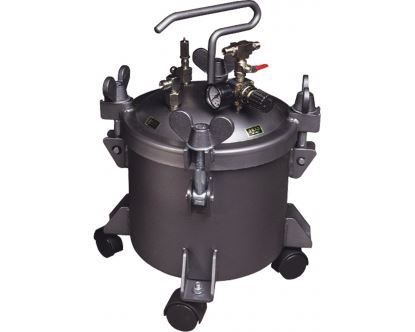
Pressure Pot Tank
A pressure pot, which can also be known as a pressure feed paint tank or pressure paint pot, is mostly used in spray painting applications. With a pressure pot, the spray gun can be operated at a lower pressure setting compared to using a siphon-feed system. This can help reduce overspray and paint wastage, as the paint is atomised more efficiently and directed precisely onto the desired surface. Pressure pots come in a number of sizes, 2ltr, 10ltr or 20ltr. This is advantageous when working on larger projects or when a continuous supply of paint or coating is required without frequent refilling.
Catch & Match Enterprise Corp.
Catch & Match Enterprise Corp., was established in 1990. Before it was established, the owner spent his 3 whole days in order to take an unforgettable name for his company. As matter of fact, the words "Catch" & "Match" respectively contains its meaning as described below.
"Catch" is to encourage every company staff to be aggressive to find the right customers. "Match" is to remind every company staff to be wholehearted to deal with all existing customers.
Surely, we will continue to develop more quality products to meet the market demands.
Our Factory
Catch & Match Enterprise Corp., was established in 1990. Before it was established, the owner spent his 3 whole days in order to take an unforgettable name for his company. As matter of fact, the words "Catch" & "Match" respectively contains its meaning as described below. "Catch" is to encourage every company staff to be aggressive to find the right customers. "Match" is to remind every company staff to be wholehearted to deal with all existing customers.
Our Product
Pressure Pots (Pressure Tanks), Paint Equipment, Agitators, Air Operated Diaphragm Pumps, Multi-function- Double Diaphragm Pump / Agitator, Air Spray Gun, HVLP Turbine Spray Gun, HVLP Air Spray Gun, HP Air Spray Gun, LVLP Air Spray Gun, Reduced Pressure Spray Gun, Pressure-Feed Spray Gun, Automatic Spray Gun, Spray Guns, Paint Spray Gun, Gravity Gun, Suction Gun
Product Application
1. Car Refinish
2. Industrial and automotive facilities
3. Spray systems
4. Touch-up spraying
5. Carpentry
6. Test coating laboratories
7. Decorative Painting
8. Yacht and Boat Building
9. Automated
Our Certificate
ISO9001 2008
A stainless steel pressure pot is a type of container used to store and release pressurized liquids and gases. It is typically made out of stainless steel, a corrosion-resistant alloy, and is used in high-pressure applications in many industries, such as chemistry and food processing. The pot is typically fitted with one or more valves, a pressure gauge, and a safety relief valve to release excess pressure. These pressure pots are often used to store and pressurize fluids such as water, steam, or air, and can also be used to store liquefied gases such as oxygen and argon.
A compressed air paint tank is a compressed air tank used for transferring paint and paint thinners through a spray gun. Air pressure paint tanks have an expandable bladder that can reach up to 4,500 psi in size and utilizes high-pressure air to push paint through a spray gun. This can increase the efficiency of a project and cut down on the amount of time it takes to finish a job.
A pressure paint tank is a specialized tank used for pressurizing paint for a variety of applications. It is designed to resist corrosion and is usually coated with a protective finish. Pressure paint tanks are widely used in industrial settings for spray-painting and other tasks that require even coverage and a smooth finish. The tank is sealed to ensure no air leaks occur and that the pressure remains even. They are used in commercial and industrial settings, such as automotive body shops, auto dealerships, and furniture stores. Pressure paint tanks are also used to stain and seal wood products, paint grills and outdoor furniture, and to perform many other treatments.
A HVLP (High Volume Low Pressure) Pressure Pot is a device used to apply a material such as paint, primer, or sealant. It uses air pressure to atomize the material and provide a more even or "atomized" spray pattern. These systems are typically favored for their low overspray, ability to cover large areas quickly, and reduced paint waste.
A pressure pot tank is a type of air compressor tank that is used to store large amounts of air pressure in order to power air tools. It is typically made of steel or aluminum and has a valve or outlet that allows the controlled release of compressed air. Pressure pot tanks are used in a variety of industrial and commercial applications, such as spray painting and sandblasting.
Paint tanks and pressure pots are specialized tools used by professional painters to store, mix and dispense paint. Paint tanks and pressure pots are typically made of durable, corrosion-resistant materials such as stainless steel, plastic or aluminum. They are designed to hold a specific volume of paint and allow for the addition of air pressure to be applied to the paint. The air pressure helps to evenly disperse the paint and create a consistent finish on the surface being painted. In addition to providing a more even finish, using a paint tank and pressure pot also reduces the amount of time spent on a painting project.
A pneumatic pressure pot is a type of pressure vessel used in a variety of industrial applications. It is designed to contain and regulate the pressure of a gas or liquid, usually compressed air or water. The pot is typically made of steel or aluminum and is equipped with a pressure gauge and a valve that allows the user to adjust or regulate the pressure inside the pot. Pressure pots can be used to store and dispense fluids, provide a controlled environment for mixing, or pressurize a system. They are often used in manufacturing, automotive repair, and other industrial processes.
A pressure pot paint tank is a specialized container used to store and mix paint for use in industrial applications. These tanks are designed to provide a controlled environment for the paint to mix, ensuring a consistent and reliable finish. The tanks are typically made of stainless steel or other corrosion-resistant materials and often feature a pressure relief valve and a pressure gauge, allowing the user to monitor the internal pressure and make adjustments as needed. Pressure pots are often used in automotive bodywork and industrial coating operations.
Stainless Steel Paint Pressure Pot
Stainless steel paint pressure pots are ideal for painting, staining, and other coating applications that require precise, consistent, and controlled pressure. These units provide a steady, even pressure for the spray gun, eliminating the need for frequent adjustments. They are also extremely durable and corrosion-resistant, making them ideal for use in harsh environments. They are available in various sizes and designs to suit any project.
What is Pressure Pot Tank
A pressure pot, which can also be known as a pressure feed paint tank or pressure paint pot, is mostly used in spray painting applications. With a pressure pot, the spray gun can be operated at a lower pressure setting compared to using a siphon-feed system. This can help reduce overspray and paint wastage, as the paint is atomised more efficiently and directed precisely onto the desired surface. Pressure pots come in a number of sizes, 2ltr, 10ltr or 20ltr. This is advantageous when working on larger projects or when a continuous supply of paint or coating is required without frequent refilling.They are especially beneficial when using thicker or more viscous coatings, such as primers, high-build coatings, or certain types of adhesives. The higher pressure helps to atomise these materials effectively, allowing for better coverage and adhesion.
Advantages of Pressure Pot Tank
Consistent Paint Supply
They ensure a consistent and uninterrupted supply of paint to various application devices such as spray guns. This consistency is vital for achieving uniform coatings on products, eliminating the risk of uneven finishes.
Improved Finish Quality
With a paint pressure pot, users can achieve a higher quality finish. The steady pressure results in an even distribution of the coating, reducing streaks, blotches, and imperfections on the painted surface.
Enhanced Efficiency
When using paint pressure pots, it allows for continuous spraying without the need to frequently refill paint reservoirs, leading to time savings and higher production output.
Precision and Control
Pressure paint tanks offer precise control over paint flow and pressure settings, ensuring consistent results across different projects.
Pressure pots use compressed air to feed a pressure pot which will force feed coating to a spray gun. You can use a pressure pot with an HVLP, conventional, or LVMP spray gun.
Pressure pots offer a variety of features as options including multiple regulators, agitation, and even multiple outlets for multiple spray guns. Additionally, pressure pots can be designed to allow for heating of your coating and for other specialty needs. A pressure pot will not supply as high volume of fluid at a given time. However, a pressure pot will allow for finer control of the volume of paint you are supplying a spray gun, the air pressure you are using to atomize a coating, and the pressure that you are supplying a coating at.
Set the fluid regulator to 10psi
Shut off the atomization air to the spray gun
Pull trigger on spray gun and flow liquid into a measuring cup for 15 seconds. Multiply fluid ounces in the measuring cup by 4 to determine fluid ounces per minute.
Fluid ounces per minute should be between 10-12oz which is equal to 2.5-3oz in 15 seconds
Raise or lower fluid pressure to achieve desired fluid flow. When lowering pressure make sure to relieve pressure on pot before retesting
Set the air regulator to deliver 30-45psi of air pressure for conventional/high efficiency spray guns or to deliver max psi for HVLP spray guns
Spray a horizontal test pattern and balance the spray pattern
Spray a fast pass to determine particle size
Adjust air and fluid to even out distribution when spraying a pass
Final Adjustment
Spray a part, piece or vehicle to see if:
a. Proper finish quality can be met
b. Production can be maintained
c. The settings match the painter's spray tempo
Pressure Pot Tanks - A Complete Buying Guide
Material Capacity
While this may be obvious, you will want to consider how much material you intend to spray at a given time. Most paint pressure pots start at 2 gallons, if you plan on using smaller volumes of material then you would typically want to consider a 2 quart pressure cup or you can work out of a quart can within a paint pressure pot. The other important thing to consider about material capacity is if the pressure pot tank has a holding capacity with material already in a container and the capacity if the material is just poured into the paint pressure pot. For example the binks 5 gallon paint pressure pot is designed to hold a 5 gallon bucket of material directly inside the tank or up to 9.8 gallons when poured directly into the paint pressure pot. This is important because the actual amount of workspace is roughly double what the tank is titled. Ultimately you typically want to consider a paint pressure pot that is large enough to minimize refills for most of the work you do but is not to heavy if you need mobility.
Certification
In addition to material capacity you should consider if a paint pressure pot is made with any certification regarding its quality. Low price paint pressure pots will typically not have any certification (but they are also $100 vs about $600 dollars for a upgraded paint pressure pot). Important certifications for paint pressure pots include an asme certification for pressure and/or vacuum. An asme certification is an inspection process that a manufacturer and product goes through showing that the pressure vessel made are guaranteed to withstand a certain amount of pressure. A vacuum rating is similar but refers to a guarantee that the vessel will tolerate a certain amount of suction (often expressed in inches hg). These ratings are guarantees that a paint pressure vessel will work under certain demands. This can be important because depending on your application, you may need higher pressures, or in general having an asme stamped rating is a sign of high quality. Binks has 110 psiand 85 psi rated tanks. However if price is significantly important then you may decide on a non certified paint pressure pot.
Configuration Options
Options for paint pressure pot configurations can vary greatly depending on the manufacturer. Low cost paint pressure pots will offer no options and will come in a single design while other paint pressure pots will offer options on the number of regulators (from 0 – 2), the types of regulators (sensitive or standard), agitation (gear reduced, direct drive, or no agitation), and material type (stainless, galvanized, zinc plated, stainless steel fitted). If you are considering a premium pressure pot tank here is a simple way to decide on the options you may want.
Tank Material
The material that your pressure pot tank is made from is also important when choosing a pressure pot tank. Water born coatings can cause corrosion of a pressure pot tank unless the tank is designed to work with water based coatings. The best paint pressure pot material for water borne coatings is stainless steel however for occasional use you can still use a galvanized or zinc plated paint pressure pot, you just have to be diligent about not leaving the water born material in the paint pressure pot.
Liners & Parts
A final factor to consider when buying a paint pressure pot is whether disposable liners and repair parts are available for the paint pressure pot. Liners make clean up quick and easy when you are switching coatings. Parts allow you to continue to use the paint pressure pot for years without ever needing to replace the pressure pot itself. Important parts for a pressure tank include lid gaskets, rebuild kits for the regulators, and replacement fittings for the parts on the paint pressure pot as well as air motors if you will be buying an agitated paint pressure pot. All of these are available with binks paint pressure pots, often lower cost pressure pots are designed to be thrown away.
Pressure pots use compressed air to feed a pressure pot which will force feed coating to a spray gun. You can use a pressure pot with an HVLP, conventional, or LVMP spray gun.
Pressure pots offer a variety of features as options including multiple regulators, agitation, and even multiple outlets for multiple spray guns. Additionally, pressure pots can be designed to allow for heating of your coating and for other specialty needs. Compared to an airless paint sprayer, a pressure pot will not supply as high volume of fluid at a given time.
However, a pressure pot will allow for finer control of the volume of paint you are supplying a spray gun, the air pressure you are using to atomize a coating, and the pressure that you are supplying a coating at.
Depending on the spray gun you use with your pressure pot, you can also save significantly on the amount of coating that you will use. If you can use an HVLP or LVMP spray gun with your pressure pot because your material is not too thick you will be able to use about half as much paint at a given time compared to using an airless paint sprayer. A fluid line from a pressure pot will also typically require less solvent to clean.
Precautions for Using Paint Pressure Pot Tank
Pressure pot is whistling
A common issue that people will experience with their pressure pot is that it will begin making a whistling noise as pressure is increased on the pressure pot. This can be a frightening noise. The cause of this problem is that air is escaping from the top of the lid, which under normal circumstances should not occur. This is caused by a few different issues, by checking these issues you can see what might be causing your pressure pot to whistle.
Lid is not tightened enough on all sides - Most pressure pots will come with a few collars that will allow the lid to be tightened. If the lid is not tightened enough or evenly on each side air will be able to escape from between the lid and pressure pot resulting in a whistling sound.
The seal under the lid is worn - a pressure pot will typically have a seal that prevents air from escaping from the pressure pot by creating a tight fit between the lid and the pressure pot. If you tried tightening the bolts on each side of the pressure pot and it is still whistling, then the most likely cause is the seal under your pressure pots lid has worn too much and needs replaced.
Regulators will not work to adjust air or fluid pressures
If you are trying to adjust the inlet pressure that your regulators are providing whether it be for fluid or air pressure and they are not adjusting it is usually because the regulators have become damaged. The most common issue that occurs within the regulators is that the internal diaphragms have worn or material has gotten inside the regulator preventing it from adjusting appropriately. This is how you can prevent your fluid and air regulators from wearing prematurely.
Do not leave the regulators turned in if you are disconnecting air to the pot . Abrupt removal of the air to the pressure pot can cause a vacuum which can cause material to be pulled up through the regulators which will cause them to not work. If you do not want to have to turn the regulators out routinely you can also add a ball valve prior to the regulators. When you want to disconnect your pressure pots air you would slowly close the ball valve and then remove the air to the pressure pot. This will eliminate the suction being pulled on the pressure pot and improve the life of your regulator.
If your regulators are not working you typically will need to order a regulator repair kit for the regulators.
Coating will not move through pressure pot and spray gun
If you have your pressure applied to the pressure pot and you are not seeing any fluid come out of your pressure pot it could be due to a few reasons. First, check to see if the coating has hardened in your pressure pot's fluid outlet or if coating has hardened in your pressure pot's fluid line or spray guns' fluid passages. If coating has not hardened in your fluid line or fluid outlet you may need to increase the pressure on the pot. If the pressure is above 20 pounds or is excessively high and coating is still not flowing you may want to try a larger fluid nozzle or fluid line on your spray gun (unless there is a large height difference between the pot and your spray gun then the pressure may be needed).
How to prevent issues with coating flowing in your pressure pot
If your fluid nozzle is too small you will need extra pressure on the pressure pot to paint which will cause your equipment to wear quicker or not be able to spray (this is why we recommend a larger fluid nozzle if it will work for you). If the technical data sheet doesn't specifically mention spray gun application and you cannot get the coating to flow you may need to use different application equipment like a transfer pump with a high pressure ratio or an airless paint sprayer.
Properly clean your pressure pot - when you are finished spraying you should empty the pressure pot of all coating and afterwards flush the fluid lines with an appropriate solvent until the material leaving the line is clear, by doing this you will reduce the chance that coating will build up in the pressure pots fluid outlet and fluid line. Additionally, once a pressure pot has been flushed you should leave the lid on so that air is not able to enter the fluid lines which could cause any residual coating to harden.
FAQ
Hot Tags: pressure pot tank, China pressure pot tank manufacturers, suppliers, factory, HVLP Gravity Feed Spray Gun, Automatic Coating System, High Pressure Air Spray, High Pressure Paint Sprayer, Pressure Pot, Hvlp Pot
Send Inquiry
