

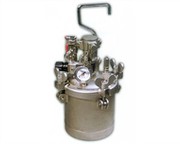
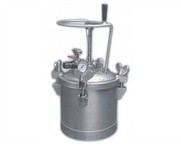
Pneumatic Pressure Pot
Pressure Pots (or Pressure Tanks) use compressed air from a compressor. The compressed air increases the pressure within the pot which forces the coating to move, through the hose, in direction of the spray gun. Pressure tanks are commonly available in sizes between 2-120 liter (0.5-32 gallon) and are made either from stainless steel or carbon steel (some with inner liners made from plastic or stainless steel for easy cleaning). A common option for both, stainless and carbon steel tanks, is an air-agitator to constantly agitate the coating while spray painting.
Catch & Match Enterprise Corp.
Catch & Match Enterprise Corp., was established in 1990. Before it was established, the owner spent his 3 whole days in order to take an unforgettable name for his company. As matter of fact, the words "Catch" & "Match" respectively contains its meaning as described below.
"Catch" is to encourage every company staff to be aggressive to find the right customers. "Match" is to remind every company staff to be wholehearted to deal with all existing customers.
Surely, we will continue to develop more quality products to meet the market demands.
Our Factory
Catch & Match Enterprise Corp., was established in 1990. Before it was established, the owner spent his 3 whole days in order to take an unforgettable name for his company. As matter of fact, the words "Catch" & "Match" respectively contains its meaning as described below. "Catch" is to encourage every company staff to be aggressive to find the right customers. "Match" is to remind every company staff to be wholehearted to deal with all existing customers.
Our Product
Pressure Pots (Pressure Tanks), Paint Equipment, Agitators, Air Operated Diaphragm Pumps, Multi-function- Double Diaphragm Pump / Agitator, Air Spray Gun, HVLP Turbine Spray Gun, HVLP Air Spray Gun, HP Air Spray Gun, LVLP Air Spray Gun, Reduced Pressure Spray Gun, Pressure-Feed Spray Gun, Automatic Spray Gun, Spray Guns, Paint Spray Gun, Gravity Gun, Suction Gun
Product Application
1. Car Refinish
2. Industrial and automotive facilities
3. Spray systems
4. Touch-up spraying
5. Carpentry
6. Test coating laboratories
7. Decorative Painting
8. Yacht and Boat Building
9. Automated
Our Certificate
ISO9001 2008
A pressure pot paint tank is a specialized container used to store and mix paint for use in industrial applications. These tanks are designed to provide a controlled environment for the paint to mix, ensuring a consistent and reliable finish. The tanks are typically made of stainless steel or other corrosion-resistant materials and often feature a pressure relief valve and a pressure gauge, allowing the user to monitor the internal pressure and make adjustments as needed. Pressure pots are often used in automotive bodywork and industrial coating operations.
Stainless Steel Paint Pressure Pot
Stainless steel paint pressure pots are ideal for painting, staining, and other coating applications that require precise, consistent, and controlled pressure. These units provide a steady, even pressure for the spray gun, eliminating the need for frequent adjustments. They are also extremely durable and corrosion-resistant, making them ideal for use in harsh environments. They are available in various sizes and designs to suit any project.
A pressure pot tank is a type of air tank designed to be used in conjunction with a pressure pot paint sprayer. It is typically cylindrical in shape and made of metal or plastic. The tank is filled with a mixture of air and paint, and the pressure created by the air forces the paint out of the nozzle of the sprayer. Pressure pot tanks are used to spray high-viscosity paints such as latex, enamels, and lacquers onto surfaces. They are commonly used in industrial and commercial painting applications.
A pressure feed paint tank is a device used to store paint in a pressurized environment. It is typically used to store paint for use in industrial or commercial painting applications. The tank is filled with a pressurized gas such as compressed air or nitrogen, and the paint is stored at a constant pressure. This allows for the paint to be quickly and easily dispensed when needed, without the need for manual agitation or stirring. Pressure feed paint tanks can be used for a variety of paints, including water-based, oil-based, and latex-based paints.
A stainless pressure tank is a type of tank designed to hold liquids or gases at a pressure different from the ambient pressure. The tank is typically made from stainless steel, which has excellent corrosion resistance and can withstand high pressures. The tank may be equipped with a pressure relief valve and a pressure gauge to monitor the contents of the tank. Pressure tanks are used in many applications, including water storage, industrial processing, and fire suppression.
A stainless steel pressure pot is a type of container used to store and release pressurized liquids and gases. It is typically made out of stainless steel, a corrosion-resistant alloy, and is used in high-pressure applications in many industries, such as chemistry and food processing. The pot is typically fitted with one or more valves, a pressure gauge, and a safety relief valve to release excess pressure. These pressure pots are often used to store and pressurize fluids such as water, steam, or air, and can also be used to store liquefied gases such as oxygen and argon.
A compressed air paint tank is a compressed air tank used for transferring paint and paint thinners through a spray gun. Air pressure paint tanks have an expandable bladder that can reach up to 4,500 psi in size and utilizes high-pressure air to push paint through a spray gun. This can increase the efficiency of a project and cut down on the amount of time it takes to finish a job.
A pressure paint tank is a specialized tank used for pressurizing paint for a variety of applications. It is designed to resist corrosion and is usually coated with a protective finish. Pressure paint tanks are widely used in industrial settings for spray-painting and other tasks that require even coverage and a smooth finish. The tank is sealed to ensure no air leaks occur and that the pressure remains even. They are used in commercial and industrial settings, such as automotive body shops, auto dealerships, and furniture stores. Pressure paint tanks are also used to stain and seal wood products, paint grills and outdoor furniture, and to perform many other treatments.
A HVLP (High Volume Low Pressure) Pressure Pot is a device used to apply a material such as paint, primer, or sealant. It uses air pressure to atomize the material and provide a more even or "atomized" spray pattern. These systems are typically favored for their low overspray, ability to cover large areas quickly, and reduced paint waste.
What is Pneumatic Pressure Pot
Pressure Pots (or Pressure Tanks) use compressed air from a compressor. The compressed air increases the pressure within the pot which forces the coating to move, through the hose, in direction of the spray gun. Pressure tanks are commonly available in sizes between 2-120 liter (0.5-32 gallon) and are made either from stainless steel or carbon steel (some with inner liners made from plastic or stainless steel for easy cleaning). A common option for both, stainless and carbon steel tanks, is an air-agitator to constantly agitate the coating while spray painting.
Reduced Overspray
With a pressure pot, the spray gun can be operated at a lower pressure setting compared to using a siphon-feed system. This can help reduce overspray and paint wastage, as the paint is atomised more efficiently and directed precisely onto the desired surface.
Large Volumes and Extended Spraying
Our Pressure pots come in a number of sizes, 2ltr, 10ltr or 20ltr. This is advantageous when working on larger projects or when a continuous supply of paint or coating is required without frequent refilling.
Greater Efficiency
They are especially beneficial when using thicker or more viscous coatings, such as primers, high-build coatings, or certain types of adhesives. The higher pressure helps to atomise these materials effectively, allowing for better coverage and adhesion.
Versatility
Pressure pots can be used with a variety of our spray guns, making them versatile for different types of coatings and applications. They are commonly used in industrial settings, automotive painting, woodworking, and other professional applications.
Improved Control
The precise control over pressure and paint flow provided by a pressure pot allows for better control over the application process. This can result in higher-quality finishes and reduced rework.
How Pressure Pots Work
Pressure pots and resin casting pots function similarly in terms of air regulation and contaminant removal:
1. Air Filtration: The air compressor supplies air that is cooled in a long hose and then filtered to remove contaminants. A 3-stage filter with desiccant is ideal for ensuring clean air.
2. Pressurization: Clean air continues from the filter into the pressure or casting pot, pressurizing the materials inside.
For resin casting, place the mold and material inside the pot and then pressurize it. The pressurized air from the compressor crushes air bubbles in the resin to microscopic sizes, resulting in a clear, bubble-free cast. Keep the resin in the casting pot until fully cured.
When using a pressure pot for spraying paint or stains:
Fill the Pot: Pour the paint into the pressure tank.
Connect the Spray Gun: Attach the spray gun to the pressure tank before turning on the air.
Regulate Pressures: The air pressure in the spray gun must be higher than the fluid pressure in the tank. For example, if the fluid pressure is 20 PSI, set the gun to at least 21 PSI. Adjusting the regulators properly ensures optimal spraying performance.
How to Choose Paint Pressure Pot
Options that can be added, depending on the brand of the paint pressure pot include whether there are 0 or up to 2 regulators. Additionally, you may be able to choose between extra sensitive regulation or standard regulators. Two regulators provide the opportunity to change your fluid pressure and your spray gun air pressure all at a single source. Two regulators allow for rapid adjustment of your painting settings and is ideal for a majority of applications. A single regulator will limit control at the pressure pot to just fluid pressure. This can be a good option if you are using the pressure pot only to control fluid volume or if you have an air regulator at the wall that you may prefer to use. Extra sensitive regulators allow for greater precision in adjusting the paint pressure pots fluid or air pressure. This can be beneficial when you're working with thin coatings, like stains, that may need only very low pressures to achieve ideal results when being sprayed.
A second option to consider is whether you may need agitation for your paint pressure pot. Agitation will help keep coatings that tend to separate after they are mixed in suspension. This can be important for a variety of different coatings with specific examples including zinc and stains. Common options for paint pressure pots agitation include direct drive or gear reduced agitation. The primary determinant of which agitation may be right will depend on the amount of material and the viscosity of the material. High volumes of material (above 5 gallon paint pressure pots) you will typically want to consider a gear reduced agitator as it will not wear rapidly under the excess demand that is created from the materials weight. You may also want to use a gear reduced agitator if the paint you spray is highly viscous, (like zincs) then you will typically want a gear reduced agitator even for smaller volumes of paint at a time. If you do not have high volumes of paint or you spray low viscosity materials a direct drive agitator will be fine for your painting needs.
Another option you may have with your paint pressure pot is the material it is made from. Common options include galvanized metal, stainless steel, or aluminum. If you will be using water based you want to consider stainless steel or potentially aluminum, though stainless will resist corrosion best. In addition to the material that your paint pressure tank is made from you will want to determine the quality of the design of the tank. High-end paint pressure tanks will be made with an ASME certification guaranteeing their ability to properly handle a certain volume of pressure or suction being placed on them. The ASME rating may vary depending on the paint pressure tank.
Paint pressure pots may range in size from 2 gallons up to 30 gallons or more. You will want to consider how long your paints pot life is (meaning how long until it can no longer be properly sprayed due to it solidifying). If you have a short pot life you will typically consider a smaller size (like a 2.8 gallon pressure pot). If you need portability the smaller size pot will also work well. If you want to be able to paint for a long time before needing to add additional material, you may consider a larger paint tank.
Paint Pressure Pot Outfits complete with a spray gun and the fluid/ air hose you need. This provides a perfect solution for smaller painting jobs. Additionally, you can often get a spray gun that may cost $240 - $490 included at a price that is much less than the parts of the package would cost individually. A final accessory that can often be valuable are liners that are able to be thrown away, these liners are typically anti static so that their is less risk of a spark being created. The liners allow for quick change out of colors and/ or easier clean up of your paint pressure tank when you are done with your spraying
Size - Sizes can range from small pots (2L, 4L) up to larger pots (10L, 20L). The size of the job dictates the size of the pot required.
Agitation - Agitation is the ability to stir products which may separate over time. You can choose pots with no agitation, manual and air motor driven options.
Fluid delivery - Fluid delivery is the method by which product is extracted from the pot. This is either via top or bottom outlet.
●Note: Bottom outlet systems are the easiest to clean.
Step 1 - Remove and inspect lid.
Remove the top of the pressure pot and inspect the gasket. Look for cuts and make sure it is not distorted in any way.
Step 2 - Fill pot.
Fill the pressure pot with product, ensuring you do not exceed the pot's capacity.
●Note: Most quality pressure pots bigger than 2l will have a paint liner which makes for easy cleaning.
Step 3 - Sealing the pot.
When sealing the pressure pot lid, ensure you do not over-tighten. The best way to ensure this is by tightening the securing mechanism (either screw lid or wing nuts) to the point where it stops with light to moderate torque pressure, and then give it one quick "nip" to secure. Over-tightening will likely damage the gasket.
●Note: Larger pressure pots use wing nuts to secure the lid. The proper method to secure these is by tightening the two horizontally opposed nuts to the point where they stop, followed by the remaining two nuts; Then one quick nip up on all four to secure.
●Tip: If a leak is detected once the pot is pressurised, it will need to be de-pressurised before you are able to re-tighten.
Step 4 - Hose set up
Pressure pot hoses come with fluid and air lines. The fluid line is usually clear and has a larger diameter.
Connect one end of the fluid line to the fluid outlet on the pressure pot (3/8 bsp) and the other to the fluid inlet of the spray gun. The air lineairline needs to be connected to the air regulator on the pressure pot with the opposing end connected to the air inlet on the gun.
Do not use thread tape. Most quality pressure pot systems use nut and tail air connections that have a conical (tapered) seat eliminating the need for external sealing products.
●Note: A common misunderstanding: The air regulator on the pressure pot does not control the air atomisation pressure on the spray gun. It only controls pressure going into the pressure pot.
One of the biggest issues with pressure pots is air getting into the fluid line. If you see bubbles in the fluid line check to make sure you have adequately tightened the fluid connection to the pressure pot and gun.
Step 5 - Air pressure
Before connecting the air, release the air regulator on the pressure pot all the way down (anti-clockwise). Connect your the air lineairline to your pressure pot ensuring you are using filtered air so that you do not contaminate the product. Close your relief valve and slowly turn the air regulator up (clockwise).
●Tip: Normally you will only require between 2 and 5 psi of pot pressure when spraying two-pack and enamel. Many users think 40 psi is required; However, you only need enough pressure to push product to the gun head. To test this, turn off the atomisation control on your spray gun, remove the air cap of and pull the trigger. Correct pressure in the pot will produce a small arc of product that travels no more than 50 - 70mm out of the gun nozzle. If it shoots across the room your pressure is too high.
●Note: Thicker products will require more pressure to get the product to the gun head. Therefore when spraying polyester or sound deadening material you will need to adjust your pressure up a few psi to get the require product flow.
How to Use a Mixing Pressure Paint Tank
A mixing paint tank is an essential tool for any professional painter or paint contractor. It allows you to efficiently mix large quantities of paint so you can keep your painting projects for a long time. Here is an in-depth look at paint mixing tanks, how to use them properly, and some important safety tips.
A paint tank, sometimes called a paint pot, is a container designed specifically for holding, mixing, and feeding paint to a paint spray gun. Paint pot ideal for large area spraying such as buses, trucks, and vans, fences, interior/exterior wall, garage, and other big projects with high efficiency.
It has an airtight lid and is connected to the spray gun via a hose. Paint is poured into the tank, then pressurized air is added. This air agitates and mixes the paint, keeping it properly blended while spraying. The constant air pressure also forces the paint up through the paint hose and out of the spray gun nozzle.
The key advantage to using a paint tank over just pouring paint directly into a spray gun is uniform mixing. With a tank, the paint stays well-mixed and thinned as you spray. Without a tank, paint components can separate and clog the spray gun. A tank also holds more paint than a spray gun cup, allowing longer spraying sessions before refilling.
When getting started, fill the paint tank about three quarters full with the paint you'll be spraying. Start by making sure your paint tank is clean. Any dried paint or debris left over from previous use can clog up the hose and spray nozzle. Strain the paint through a paint filter or mesh bag first to remove any clumps or debris. Latex and oil-based paints both work well in pressure tanks. Screw the lid tightly onto the tank and make sure all seals are properly in place.
Next, securely close and seal the tank's lid. Attach the air hose from your compressor to the tank's air inlet, and attach the paint hose from the tank to your spray gun.
Slowly increase the air pressure in the tank to between 8 to 15 PSI. This will vary based on the viscosity and type of paint. Thicker paints require more pressure to atomize properly. Activate the spray gun briefly to ensure paint is flowing smoothly. Adjust the pressure up or down as needed until the paint is spraying an even mist.
When using a mixing tank for latex paint, be very careful not to overmix. Latex has a "pot life" and excessive blending will ruin the paint. Mix just long enough to combine, usually 5-10 minutes. You'll know it's overmixed if the paint starts bubbling and changes texture. Then it's unusable. Oil-based paints and primers can handle longer mixing duration. But stick to the minimum time needed to fully incorporate all components.
Turn on the tank and allow it to run for a few seconds to prime the pump and hose. Priming the tank helps prevent paint spraying everywhere when you pull the trigger for the first time.
As you spray, keep an eye on the paint level inside the tank. When it gets low, turn off the compressor and carefully refill. Remember to strain any new paint before adding to the tank. Don't overfill the tank, as air space is needed for mixing and stirring the paint.
Safely using paint mixing tanks
Place it on a level, steady surface so it doesn't tip while operating. The spinning action will make it "walk" if not stable.
Turn off before adding or moving the tank.
Never exceed the maximum working pressure rating listed for your tank. Over-pressurization can dangerously damage the tank.
Periodically check fittings and hoses for wear. Replace any damaged pieces.
Prevent dirt and debris from getting into the tank. Always strain paint before adding to the tank.
Use caution when refilling. Turn off the air supply and release pressure before opening the lid.
Clean the tank thoroughly after each use. Residual dried paint can clog hoses, fittings, and spray nozzles.
How to Clean Pressure Pot
Remove the lid and empty any excess product from the pot, wipe the liner and pick up tube (if applicable) with some thinners, place two litres of used thinners in the liner, reconnect the lid and air line and turn up your pot pressure up to 30 psi.
Turn off the gun atomisation pressure and flush out the system. Repeat the process with two litres of clean thinners and clean you spray gun in the usual fashion.
Important safty note
Pressure pots are pressure vessels and can cause harm if not used properly. Regularly check your equipment to ensure safety blow-off value and pressure gauge are working properly. Safety valves should activate at approximately 40 psi of pot pressure. Slowly increase the pressure until the safety valve activates. If you get to 50 psi and the safety valve has not blown, have the unit serviced.
FAQ
Hot Tags: pneumatic pressure pot, China pneumatic pressure pot manufacturers, suppliers, factory, Automatic Spray Gun, Pressure Pot Tank, Stainless Pressure Tank, HVLP Paint Spray Guns, Hvlp Air Hose, Best High Pressure Paint Gun
Send Inquiry
