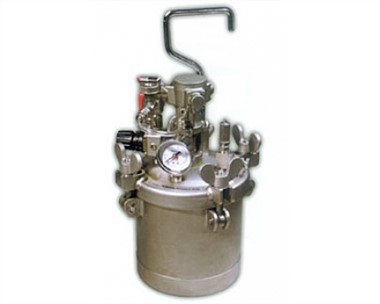
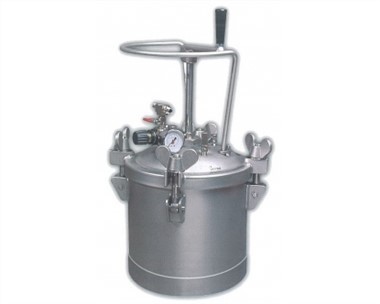
Stainless Steel Pressure Tank

The Best Stainless Steel Pressure Tank Manufacture!


Catch & Match Enterprise Corp., was established in 1990.


Our Product have Pressure Pots (Pressure Tanks), Paint Equipment, Agitators, Air Operated Diaphragm Pumps, Multi-function- Double Diaphragm Pump / Agitator, Air Spray Gun, HVLP Turbine Spray Gun, HVLP Air Spray Gun, HP Air Spray Gun, LVLP Air Spray Gun, Reduced Pressure Spray Gun, Pressure-Feed Spray Gun, Automatic Spray Gun, Spray Guns, Paint Spray Gun, Gravity Gun, Suction Gun

Why Choose Us

High Quality

Our products are manufactured or executed to a very high standard, using the finest materials and manufacturing processes.

Customized Services

Our team of experts will work closely with you to understand your needs and will provide solutions that are tailored to meet your expectations.

Long Warranty

We are confident in the quality of our products and are willing to provide you with long-term technical service support.

24H Online Service

We try and respond to all concerns within 24 hours and our teams are always at your disposal in case of any emergencies.
First 12 Last 1/2

Which material is ideally suited for your pressure vessel


Carbon Steel

Carbon steel provides a number of advantages as a pressure vessel material. In addition to being highly resistant to corrosion, shock, and vibration, it possesses a high tensile strength — Making it ideal for demanding tank applications in a wide range of industrial processes. It also retains strength at minimal thicknesses, which reduces the amount of material needed for tank fabrication, thereby lowering fabrication costs. Carbon steel is also highly recyclable and accounts for more recycled weight annually than aluminum, plastic, paper, and glass combined. In fact, approximately 50% of its production comes from reclaimed materials.


Stainless Steel

Like carbon steel, stainless steel offers high strength at low thickness. Also like carbon steel, it is highly recyclable. There are a number of different types of stainless steel. Type 304, for instance, is widely known for its superior chemical and corrosion resistance. Type 304L, on the other hand, has low carbon content and exhibits excellent weldability. Choosing the correct type of stainless steel will ultimately depend on the unique requirements of the application that the pressure vessel is being used in. In general, however, it is ideal for tanks and vessels that are exposed to the natural environment (humidity, sunlight, etc.) or high temperatures.


Hastelloy

Hastelloy pressure vessels are widely used for chemical, petrochemical, and oil and gas applications. With proper maintenance, they can last for decades, creating great cost-efficiency over their entire lifecycle. Their inherent reliability also reduces maintenance-related downtime.

Hastelloy is extremely resistant to corrosive liquids and provides protection against both localized and uniform attack. It is also very durable and resistant to cracking. Moreover, it is extremely workable (easy to weld or fabricate) and is available in a wide range of types (B2, S, C, C276, etc.), which makes it suitable for a broad range of tank applications and industries.

Most common stainless steel grades

The top three most common stainless steel grades used for pressure vessels are 304, 316, and 317. They each have slightly different compositions and properties, which we'll describe below:


Grade 304 stainless steel

The chemical composition of 304 stainless is 18% chromium, 8% nickel, and the rest is a mix of iron and carbon. 304 stainless is highly corrosion resistant because of the added chromium content. It's one of the most common types of stainless steel in use across industries.


Grade 316 stainless steel

316 stainless steel is the second most common type of stainless. It's made of the same components as grade 304, with the addition of molybdenum, which increases its corrosion resistance to chloride corrosion. This makes it excellent in marine environments, and anywhere else it's likely to be exposed to saltwater.


Grade 317 stainless steel

Grade 317 stainless steel is even more corrosion resistant than 304 or 316, since it includes more nickel in its composition. However, nickel is a very expensive material, so the addition makes it more expensive than the other two types. It's highly corrosion resistant to many acids, including sulfurous, which are particularly corrosive.

 
Design of Pressure Tanks
 

Design Pressure: This parameter is essential for defining the specifications of the vessel. It is determined based on the maximum operating pressure, accounting for pressure variations during start-ups, emergency shutdowns, and process fluctuations. The design pressure must always exceed the system's maximum operating pressure and impacts the vessel's pressure release mechanisms to prevent explosion risks. It is generally recommended that the design pressure be 5-10% higher than the peak operating pressure. For vessels that may be exposed to vacuum conditions, the design pressure should be specified to handle a complete vacuum (-14.7 psi).


Maximum Allowable Working Pressure (MAWP): MAWP is the maximum pressure at which the vessel is designed to function safely at its designated temperature. It is the highest pressure that the weakest part of the vessel can handle at this temperature.Unlike design pressure, which accounts for operational conditions, MAWP is a more general measurement based on the vessel's material limits. Factors such as corrosion and wear can reduce the MAWP, while the design pressure is determined by operational conditions and may be equal to or lower than the MAWP.

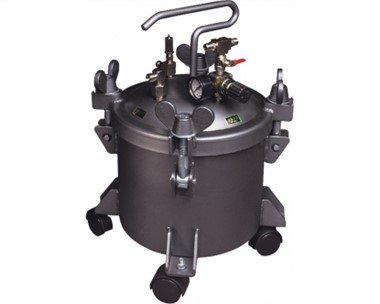
Air Pressure Paint Tank


Design Temperature: Temperature impacts the maximum allowable stress on a vessel, as material strength diminishes with higher temperatures and becomes brittle at very low temperatures. To calculate the maximum allowable pressure, the vessel must not be operated at temperatures that exceed the design temperature.


Maximum Tolerated Stress: Maximum tolerated stress is calculated by applying a safety factor to the maximum allowable stress. This safety factor compensates for possible deviations from ideal conditions in the construction and operation of the pressure vessel.


Joint Effectiveness: The ASME Boiler and Pressure Vessel (BPV) Code classifies welded joints into four categories. Joint effectiveness measures the ratio of the base material's strength to that of the welded joint.the strength of welded joints is lower. In the absence of additional inspection and radiographic testing, welded joints are regarded as weaker due to potential defects like porosity.

Stainless Steel Pressure Vessel: Wide Range of Applications


Chemical Industry

In the chemical industry, these are used to safely store and transport various chemicals, including corrosive and hazardous materials. Their corrosion resistance ensures the protection of both the contents and the environment.

Oil and Gas Sector

The oil and gas sector relies heavily on the specific types of pressure vessels to store and transport crude oil, natural gas, and petrochemical products. Their durability and resistance to extreme conditions make them indispensable in various applications.

Food and Beverage Processing

In the food and beverage industry, stainless steel vessels are essential to store and process consumable products. Their hygienic properties ensure the integrity and safety of the end products.

Pharmaceutical Manufacturing

Pharmaceutical companies use vessels like these to meet stringent quality and hygiene standards in medicines and vaccine production. The material's purity and resistance to contamination are paramount.

Aerospace and Aviation

In the aerospace and aviation sector, pressure vessels made of stainless steel play a crucial role in hydraulic systems, fuel storage, and even cabin pressurization. Their lightweight yet robust nature is vital for ensuring safe and efficient flights.

 
Our Factory


productcate-1-1


Certifications
 
ISO9001 2008


FAQ

Q: What are the most common types of steel used in the construction of pressure vessels?

A: The most common types of steel used in pressure vessel construction are carbon steel, stainless steel, and alloy steel. Carbon steel is popular due to its strength and affordability. Stainless steel is chosen for its resistance to corrosion, which is crucial in harsh chemical environments. Alloy steels, which are a combination of several metals, are selected for their unique properties like greater resistance to high temperatures and pressures.

Q: How does the choice of steel affect the performance of a pressure vessel?

A: The choice of steel significantly impacts the performance of a pressure vessel.stainless steel offers excellent corrosion resistance, making it ideal for vessels that store or process corrosive substances. Carbon steel, while less resistant to corrosion, can handle higher pressures, making it suitable for industrial applications. The thermal conductivity, tensile strength, and ductility of the steel also play a crucial role in determining the vessel's ability to withstand different operating conditions.

Q: Are there specific types of steel recommended for high-temperature pressure vessels?

A: For high-temperature applications, chromium-molybdenum alloy steels, such as the ASTM A387, are often recommended. These steels are designed to work efficiently in temperatures exceeding 500°C. They maintain excellent strength at high temperatures and resist oxidation and corrosion, making them ideal for high-temperature pressure vessels.

Q: What is the importance of steel grade selection in pressure vessel design?

A: Selecting the appropriate steel grade is critical in pressure vessel design. It ensures that the vessel can withstand the specific pressures and temperatures it will encounter, as well as any chemical or corrosive substances it may contain. Incorrect steel grade selection can lead to failures like cracking or even catastrophic ruptures, especially under high-pressure conditions.

Q: How does the fabrication process of pressure vessels vary with different types of steel?

A: The fabrication process of pressure vessels varies depending on the type of steel used. stainless steel requires different welding techniques compared to carbon steel due to its unique composition. The heat treatment process also varies; some alloy steels require post-weld heat treatment to restore their mechanical properties.the choice of steel influences the thickness of the vessel walls and the type of joints and reinforcements needed.

Q: How do I use pressure vessels safely?

A: It's important to treat pressure vessels with care, no matter what you're using them for. This includes inspecting them regularly for dents, dings, rust spots, and any other signs that the structure might be damaged. You also have to choose the right pressure vessel for your design, keeping in mind what pressures and environmental conditions it's going to be exposed to. Cyclic loading considerations for some applications is especially critical as well.

Q: What is the useful life of a pressure tank?

A: If your water is clean and you're using the right size tank, the average life-span is around 15 years.

Q: What is the purpose of a pressure vessel tank?

A: Pressure vessels are containers that hold high-pressure gases or liquids and have wide applications in industries including oil & gas, chemicals, petrochemicals, distillation towers, nuclear reactor vessels, natural gas storage systems, and hot water storage tanks.

Q: What is the purpose of installing a pressure tank?

A: They provide consistent water pressure, protect the well pump from wear and tear, improve energy efficiency, and provide a source of emergency water. Whether you're installing a new well water system or looking to upgrade an existing one, a water pressure tank is a critical component that should not be overlooked.

Q: Can you use a pressure tank without a pump?

A: A pressure tank alone, integrated into your plumbing after the main shutoff valve, will keep the volume of water in your system high, maintaining pressure at a more constant level. To boost the pressure beyond that, you need a pump to go along with the tank.

As one of the most professional stainless steel pressure tank manufacturers and suppliers in China, we're featured by quality products and good service. Please rest assured to wholesale customized stainless steel pressure tank at competitive price from our factory.

Pressure Pot Paint Tank, Stainless Steel Pressure Tank, Hvlp Pressure Pot

(0/10)

clearall